Fabergé / M. Perchin, 1886–1903
Fabergé / M. Perchin identifies Fabergé pieces, made 1886–1903.
| Maker | Fabergé |
|---|---|
| Period | 1886–1903 |
| Mark reference | FAB-MP-1886 |
| Materials | Gold, silver, mixed |
| Maker founded | 1842 |
| Maker closed | 1918 |
| Region | Russian |
| Workshops | St. Petersburg, Moscow |
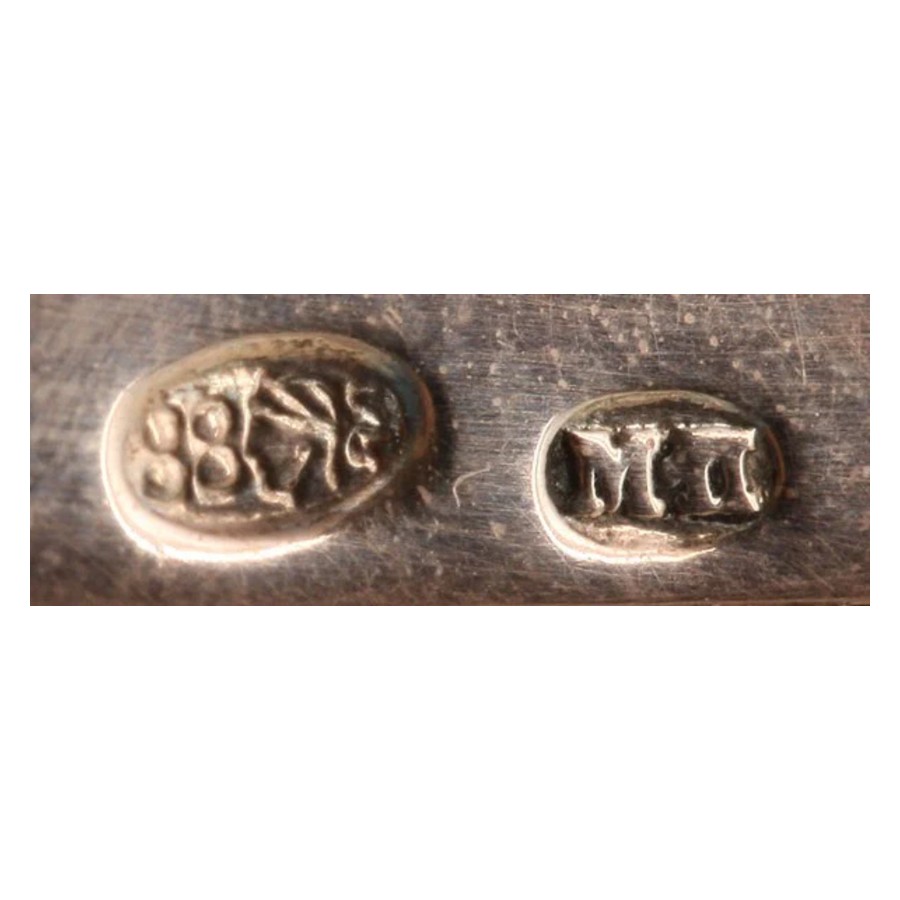
What does the Fabergé / M. Perchin look like?
Michael Perchin was Fabergé's head workmaster from 1886 until his death in 1903, and his workshop made many of the Imperial Easter eggs. If your piece is stamped with the Cyrillic initials М.П., look for the Fabergé name in Cyrillic and the St Petersburg assay marks. Pieces made after 1899 carry the kokoshnik, a woman's profile in a headdress. Earlier pieces carry the city mark with the assay master's initials and a year. Expect gold, silver gilt, guilloché enamel and hardstone. Fakes are common, so get a specialist opinion.
What other marks appear alongside it?
Kokoshnik assay, Workmaster initials.
About Fabergé
Gustav Fabergé founded the firm in St Petersburg in 1842. Under his son Peter Carl it became jeweler to the Imperial court from 1885 and opened a Moscow branch. The Bolsheviks nationalized it in 1918. Pieces carry the Fabergé name, the workmaster's initials and Russian assay marks.
What is my Fabergé jewelry worth?
SebastianCharles Auctions catalogues and sells Fabergé jewelry at auction from our gallery at 5263 Edina Industrial Blvd, Edina, Minnesota. Value depends on the individual piece and its condition. Send photographs of the mark and the piece for a free auction estimate, or call (612) 280-1377. Formal written appraisals are billed hourly from $150, with most reports delivered within two weeks.